Madelyn: You did a good job summarizing this section into three paragraphs. I also liked your current application pictures you found.
Lisa: I really liked all your pictures you found, especially the chair. Also, you did a good job writing a lot.
Saturday, February 27, 2016

Thursday, February 25, 2016
The Americas Review
Savannah: I liked the pictures she chose, especially to one of the landscape. Very different from the other, which I liked.
Katie: I liked how you split up each group, and went into detail about them. Overall, really good blog.
Katie: I liked how you split up each group, and went into detail about them. Overall, really good blog.
Wednesday, February 24, 2016
CHINA and INDIA
The architecture of China is as old as the Chinese civilization. The Chinese have always enjoyed an indigenous system of construction that has retained its principal characteristics from back then to current day. From Chinese Turkistan to Japan, form Manchuria to the Northern half of French Indonesia, the same system of construction occurred. Those areas were the areas of Chinese influence. China has the worlds larges continuous civilization which lasted 4,000 years. Today, it has the worlds largest population. When it came to architecture techniques, they agnowledged the important people in the Buddha religion. Also, the stupa ( a mound of dirt where a more permanent structure is build over) came into China as Buddhism spread to that region. The Chinese also invented the Pagoda which is a combination of the Stupa and Chinese tower building. Chinese architecture includes the Great Wall of China. This fortification was build out of stone, wood, brick, mud, and earth. It is 5500-13000 miles long. Interiors of architecture were both residential and commercial buildings that were based of courtyard building style. They focused on the layout and symmetry.
India also used the stupa technique. They also acknowledged the important people in the Buddhist religion. They had a lack of furniture. People would tend to eat, sleep, and sit on the floor. A major stupa for India was the Great Stupa of Sanchi.
PHOTOS:


CURRENT APPLICATIONS:


YOUTUBE:https://www.youtube.com/watch?v=7708E1bmoxc
India also used the stupa technique. They also acknowledged the important people in the Buddhist religion. They had a lack of furniture. People would tend to eat, sleep, and sit on the floor. A major stupa for India was the Great Stupa of Sanchi.
PHOTOS:
CURRENT APPLICATIONS:
YOUTUBE:https://www.youtube.com/watch?v=7708E1bmoxc
THE AMERICAS
During this time there were four major groups; the Olmecs, the Aztecs, the Mayans-Tolecs, and the Incas. The geography included low lands that were humid and tropical, and mountains that had extreme climate shifts. Religion was big during this time as well. They cad ceremonial centers that were the nuclei of the Mesoamerican settlement. They has temples too, that provided spatial orientation for the town. The pyramids were made to stand out and represent the gods and powers of religion. When I say many gods, I mean they believed in many gods (Polytheistic). They also believed in human sacrifice.
The Olmecs were the first major civilization in Mexico. They wer around from 2000-300 B.C. and came to a violent unknown end. They were known as the people of the rubber country. They were also well known for developing hieroglyphic writing. They were also the first to come up with a calendar in the Western Hemisphere. The temples around there civilization were a main focus of there city life. The jaguar was the symbol of their chief deity and they had realistic art. They were the first example of temple focused city type. The ceremony center was composed of the great pyramid of earth, ball court, smaller pyramids, burial grounds and giant stone heads.Artwork consisted of delicate carvings of jade, rock crystal, and less valuable stone. They had ax heads, masks and decorative objects. They also had mural paintings and pottery.
The Teotihuacans were named the city "Place of the gods" during 250B.C. -99A.D.. The cities ceremonial center was two miles in length, had a center spine, and had the Temple of the Feathered Serpent and the Pyramid of the sun/pyramid of the moon. This city was laid out in a grid with the houses of the elite raised up on a platform. They had no city walls which showed a sign of a powerful society with no enemies. Decorative motifs during this time included; birds, butterflies, flowers, and abstract signs.
The Aztecs were around from 1150-1520 A.D.. Their Tenochtitlan's center of Aztec civilization. The temple Mayor had two temples; the god of war, and the god of agriculture. The Templo mayor destroyed by the Spanish. The pyramids of the sun and moon were made out of stone and brick. They also had floating gardens. They were the first to create art expression through thoughts of life. When it came to agriculture, the chinampas was a raised garden bed that was located in a swamp or shallow lake. They had the most productive agriculture design ever developed by humans.
Finally, the Incas were the largest empire in Pre-Columbian America. They were around from 1200-1572 C.E.. There were known for there architecture and the mastering of stone cutting. They had climate variations and a capitol of Cuzco. Machu Picchu was built without mortar and was located in a seismically unstable area. It had trapdoor shaped opening and it was never discovered by the spanish. It was however discovered by an American professor Bingham in 1911.
PHOTOS:


CURRENT APPLICATIONS:


YOUTUBE: https://www.youtube.com/watch?v=mTRTPYzQ8mU
The Olmecs were the first major civilization in Mexico. They wer around from 2000-300 B.C. and came to a violent unknown end. They were known as the people of the rubber country. They were also well known for developing hieroglyphic writing. They were also the first to come up with a calendar in the Western Hemisphere. The temples around there civilization were a main focus of there city life. The jaguar was the symbol of their chief deity and they had realistic art. They were the first example of temple focused city type. The ceremony center was composed of the great pyramid of earth, ball court, smaller pyramids, burial grounds and giant stone heads.Artwork consisted of delicate carvings of jade, rock crystal, and less valuable stone. They had ax heads, masks and decorative objects. They also had mural paintings and pottery.
The Teotihuacans were named the city "Place of the gods" during 250B.C. -99A.D.. The cities ceremonial center was two miles in length, had a center spine, and had the Temple of the Feathered Serpent and the Pyramid of the sun/pyramid of the moon. This city was laid out in a grid with the houses of the elite raised up on a platform. They had no city walls which showed a sign of a powerful society with no enemies. Decorative motifs during this time included; birds, butterflies, flowers, and abstract signs.
The Aztecs were around from 1150-1520 A.D.. Their Tenochtitlan's center of Aztec civilization. The temple Mayor had two temples; the god of war, and the god of agriculture. The Templo mayor destroyed by the Spanish. The pyramids of the sun and moon were made out of stone and brick. They also had floating gardens. They were the first to create art expression through thoughts of life. When it came to agriculture, the chinampas was a raised garden bed that was located in a swamp or shallow lake. They had the most productive agriculture design ever developed by humans.
Finally, the Incas were the largest empire in Pre-Columbian America. They were around from 1200-1572 C.E.. There were known for there architecture and the mastering of stone cutting. They had climate variations and a capitol of Cuzco. Machu Picchu was built without mortar and was located in a seismically unstable area. It had trapdoor shaped opening and it was never discovered by the spanish. It was however discovered by an American professor Bingham in 1911.
PHOTOS:
CURRENT APPLICATIONS:

YOUTUBE: https://www.youtube.com/watch?v=mTRTPYzQ8mU
Wednesday, February 17, 2016
Gothic review
Becca: I really liked how you put bullet points of the characteristics of cathedrals. I also enjoyed all of the pictures you chose.
Holli: I liked how you went into the history of this time period and also the pictures you chose. The current applications you chose were fun to look at. Overall, you did a good job.
Holli: I liked how you went into the history of this time period and also the pictures you chose. The current applications you chose were fun to look at. Overall, you did a good job.
GOTHIC
Paris is the center of the Gothic world. Also, churches were the center of city life during this time period. When it came to religion, the popes had immense power. There were so many people who worshiped hwich meant they needed large spaces to fit everyone. Three things that introduced the Gothic period were; pointed arches, ribbed vaults, and fly buttresses.
Cathedrals appeared to be weightless with tall walls and many stained glass windows. These buildings transcended an earthy experience. An example of one of the Cathedrals was the Cathedral of San Denis. The cathedrals always had a basic floor plan and structural components that were very similar to the Romanesque. The chapels would radiate out of the apse and large stained glass windows. These buildings were tall with vertical lines, which suggest skyscrapers. The high vaults created new demands with construction and also had rib vaulting. The arches were pointed rather than rounded.
PICTURES:


CURRENT APPLICATIONS:


YOUTUBE: https://www.youtube.com/watch?v=uYhOaQhV6QE
Cathedrals appeared to be weightless with tall walls and many stained glass windows. These buildings transcended an earthy experience. An example of one of the Cathedrals was the Cathedral of San Denis. The cathedrals always had a basic floor plan and structural components that were very similar to the Romanesque. The chapels would radiate out of the apse and large stained glass windows. These buildings were tall with vertical lines, which suggest skyscrapers. The high vaults created new demands with construction and also had rib vaulting. The arches were pointed rather than rounded.
PICTURES:

CURRENT APPLICATIONS:
YOUTUBE: https://www.youtube.com/watch?v=uYhOaQhV6QE
Sunday, February 14, 2016
Islamic Review
Scott: I thought you did a good job of describing the design of this time period. I also liked the little cuby picture you chose for a current application.
Savannah: I liked how you started out with the Taj Mahal because it is the most important building during this time period. I also liked all of the pictured you chose. Overall, you did a good job.
Savannah: I liked how you started out with the Taj Mahal because it is the most important building during this time period. I also liked all of the pictured you chose. Overall, you did a good job.
Wednesday, February 10, 2016
ISLAMIC DESIGN
Mohammed was the figure head of the Islamic Religion. The islamic religion founded islamic design. The design had much variation in is. The mosqu was the central facility for prayer and warship and the first mosque was a prototype for mosques to come. This first mosque was actually Mohammads farm! The features of this mosque were the primeter wall, the covered columns in the all, and there was a courtyard. The purpose of this mosque was for a place for people to worship.
Another place of design was the prayer hall. In the prayer hall there was the horseshoe arch. This prayer hall was filled with these arches and was a sacred place. There were also many domes during this time. They would usually have geometric patterns, which was unique to them.When looking at this architecture people usually feel more lively than designs we have previously seen. They had many tulip design and many hand made tiles and stain glass windows. The walls would usually look like carpet.
When it came to Indian architecture the main building was the Taj Mahal. This building was very mysterious and was a mausoleum that belonged to an emperor who had lost his wife. He built this mausoleum to honor his wife, which is why it is so beautiful. There are many water features and reflections here. The reflection of the Taj Mahal was so beautiful shimmering off the water. This building has lasted thousands of years due to its architecture and way it was built.
Another area that has a lot of neat structures is Spain. There were Jews, Christians and Muslims living in this area, and they all got along peacefully. The interiors had a lot of columns and hyporstyle architecture design. They used a lot of rounded horseshoe arched in the Great Mosque/ prayer hall.
Photos:


Current applications:


YOUTUBE:https://www.youtube.com/watch?v=WdzTuMbH2LM
Another place of design was the prayer hall. In the prayer hall there was the horseshoe arch. This prayer hall was filled with these arches and was a sacred place. There were also many domes during this time. They would usually have geometric patterns, which was unique to them.When looking at this architecture people usually feel more lively than designs we have previously seen. They had many tulip design and many hand made tiles and stain glass windows. The walls would usually look like carpet.
When it came to Indian architecture the main building was the Taj Mahal. This building was very mysterious and was a mausoleum that belonged to an emperor who had lost his wife. He built this mausoleum to honor his wife, which is why it is so beautiful. There are many water features and reflections here. The reflection of the Taj Mahal was so beautiful shimmering off the water. This building has lasted thousands of years due to its architecture and way it was built.
Another area that has a lot of neat structures is Spain. There were Jews, Christians and Muslims living in this area, and they all got along peacefully. The interiors had a lot of columns and hyporstyle architecture design. They used a lot of rounded horseshoe arched in the Great Mosque/ prayer hall.
Photos:
Current applications:
YOUTUBE:https://www.youtube.com/watch?v=WdzTuMbH2LM
Tuesday, February 9, 2016
Romanesque review
Holli: I realy liked the descriptions you used. I also enjoyed the current application of the kitchen. She did a very good job.
Angie: I liked how Angie went into description on the history of this time period. The pictures she chose were also helpful to describe the look of the time period.
Angie: I liked how Angie went into description on the history of this time period. The pictures she chose were also helpful to describe the look of the time period.
ROMANESQUE
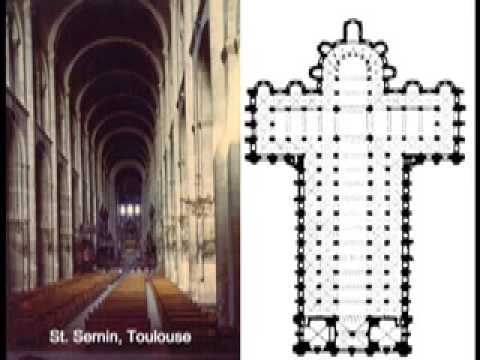
In 800 AD Charles the Great was crowned emperor of the Roman Empire. He encouraged learning and the arts. He also preserved and copied Roman literature, established schools and monasteries and encouraged building using the technology of Roman structures. This time period the religious movement was strong. Typical features of Romanesque churches include; semicircular arch and vaults, plans from the Early Christian basilica, nave, transcept, and apse modified for betterr space, and side chapel added in the transcript. The roofs of these churches were always masonary not wood and the walls were painted rich greens, blues, purples and gold. They also almost always included rich tapestries and gilded sculptures.
Residential design was much different. Most homes were made of wood, mud, twigs, dirt floors, and had little light or warmth. Not many survived due to the wood structure. On the other hand nobility had castles made of stone. Most homes were drafty, wet and dark. They also had a center fire in the great hall.


CURRENT APPLICATIONS:


YOUTUBE: https://www.youtube.com/watch?v=rSiD5Jinpuw
Residential design was much different. Most homes were made of wood, mud, twigs, dirt floors, and had little light or warmth. Not many survived due to the wood structure. On the other hand nobility had castles made of stone. Most homes were drafty, wet and dark. They also had a center fire in the great hall.
CURRENT APPLICATIONS:
YOUTUBE: https://www.youtube.com/watch?v=rSiD5Jinpuw
Friday, February 5, 2016
Byzantine Review
Emma: I liked how you mixed the pictures in with your writing to provide an example of what you were writing about. The mirror of the current application was also cool!
Becca: You also made it fun for me to read by adding the pictures in with your blog post. It was unique for you to put a piece of art work in your blog as well.
Becca: You also made it fun for me to read by adding the pictures in with your blog post. It was unique for you to put a piece of art work in your blog as well.
Early Chritainity Review
Erin: I enjoyed the flow of your writing and how you broke it up. I also liked the pictures you chose for both the current applications and the examples you found from the time period.
Holli: Your examples you used for the current applications were really cool. I also thought you did a great job writing a lot and providing a lot of facts and information about this time period.
Holli: Your examples you used for the current applications were really cool. I also thought you did a great job writing a lot and providing a lot of facts and information about this time period.
BYZANTINE
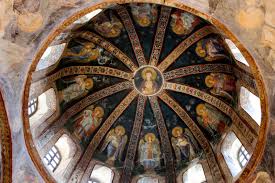
The longest political entity in European history was the Byzantine Empire, lasting from 324-1453. This Empire was influenced by the Greeks and Orient and was associated with the Eastern Culture. When it came to architecture, this empire came up with a new type: Domed Basilica. This was a combination of a dome from the east and the square base of the classical temple of the west. Central planning included the Greek Cross Plan. This meant it had round arches and arcades. The mosaics had many gold or lapis backgrounds. The brick and stone they used would almost always be alternating in color. They would even put blocks on the columns. The interiors of these domes were divided into bays and the church interior and nave were always separated. An interesting fact of the Byzantine design was that Romanesque, Islamic and Gothic architecture were all based on it. There are a few buildings that are still remaining from this time period and they are all churches and temples. The flooring was tiled in marble, often geographic designs. Floor tiles were more durable than the wall tiles they would use. They would include marble, frescos, mosaics and alabaster on the ceilings and walls.
Photos:


Current Applications:


YOUTUBE: https://www.youtube.com/watch?v=TWhGeDUSu-s
Photos:
Current Applications:
YOUTUBE: https://www.youtube.com/watch?v=TWhGeDUSu-s
EARLY CHRISTAIN
To start out the early Christain time period, was a new religion. This new religion was Christianity. Christianity began with the death of Christ in ancient Judea, an eastern outpost of the Roman empire. For the most part Rome would tolerate most religions, but Christianity wasn't most religions. Rome didn't like Christianity because it posted a threat to the emperor in that Christians couldn't declare the divinity of the Emperor. Sense Rome didn't like this religion, Christianity was basically an underground religion. When it came to what people were mainly Christians, it was the lower class. Lower class citizens of Rome were Christians because it gave them great hope.
Christians were not allowed to have houses of worship or display holy artifacts. One symbol/sign that wasn't allowed was the holy cross. Constantine believed he had received this sign from God before the battle of Milvian Bridge. The Christians realized they needed a few facilities to worship due to the rising number of believers.
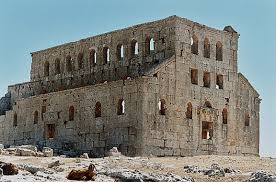
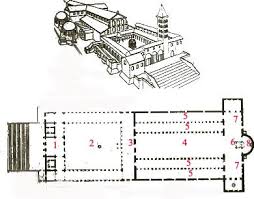
When it came to characteristics of early christian architecture, the chief goal was to glorify God. These building were usually centrally planned with separate baptisteries. They adapted Roman basilica form for churches with separation of interior of churches into nave and flaking aisles. They had clerestory windows and the entrance of churches were almost always opposite of the apse.
Photos:

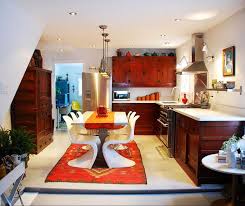
Current Applications:


YOUTUBE: https://www.youtube.com/watch?v=p17bBVA4EWA
Christians were not allowed to have houses of worship or display holy artifacts. One symbol/sign that wasn't allowed was the holy cross. Constantine believed he had received this sign from God before the battle of Milvian Bridge. The Christians realized they needed a few facilities to worship due to the rising number of believers.
When it came to characteristics of early christian architecture, the chief goal was to glorify God. These building were usually centrally planned with separate baptisteries. They adapted Roman basilica form for churches with separation of interior of churches into nave and flaking aisles. They had clerestory windows and the entrance of churches were almost always opposite of the apse.
Photos:
Current Applications:
YOUTUBE: https://www.youtube.com/watch?v=p17bBVA4EWA
Subscribe to:
Comments (Atom)